
Ivy Removal
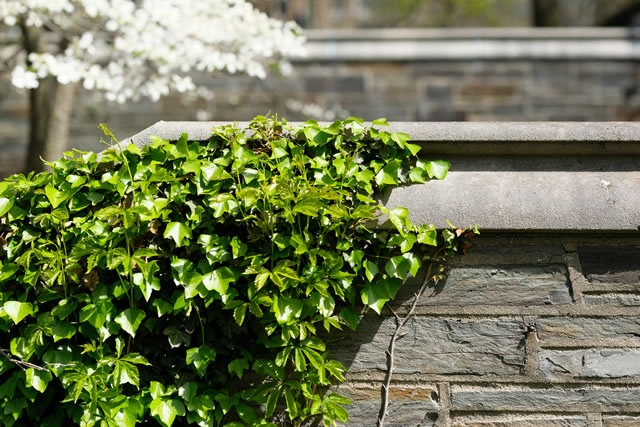
Ivy can grow into cracks in walls, into lead flashing and guttering leading to expensive repairs. It is usually simple enough to remove with a long enough ladder but where rope access is necessary we can reach awkward spots. We can remove all the waste and save your property from further damage.

Knotweed Eradication
We speedily and comprehensively resolve knotweed problems regularly for clients. We also can provide documentation for surveyors and mortgage assessors, and aim to be highly competitive.
Japanese Knotweed (Fallopia japonica) is a highly invasive non-native species, it spreads so virulently it is classified as hazardous waste if it is to be moved. Under new Anti-Social Behaviour regulations, homeowners can be fined up to £2500 for allowing knotweed to spread in their gardens! The canes reach up to 3m in height, the rhizomes can travel 2m deep and 7m horizontally underground.
Knotweed Tips
To prevent spread, Knotweed is normally required to be dealt with on site using controlled chemicals with the waste then being dried and burned. Only in very specific cases (e.g. prior to building on a contaminated site) would extensive digging and waste removal to a registered facility be carried out.
Plants can be sprayed but where this is not possible a specially formulated concentrated herbicide is injected directly into the base of the plant which then travels into the root system. It is essential this work is carried out during the growing season to allow the plants vascular system to pump the herbicide around the entirety of plant. A single treatment is seldom sufficient to kill an entire infestation completely. Two or more treatments for more established plants is typical, particularly if it has colonised masonry, where large tuber-like growths can form in cavities.
It is normally a mistake to cut the living plant as any portion of the canes, roots / rhizome or more especially the crown material larger that 5mm can root and form a new plant.
Knotweed Eradication
We speedily and comprehensively resolve knotweed problems regularly for clients. We also can provide documentation for surveyors and mortgage assessors, and aim to be highly competitive.
Japanese Knotweed (Fallopia japonica) is a highly invasive non-native species, it spreads so virulently it is classified as hazardous waste if it is to be moved. Under new Anti-Social Behaviour regulations, homeowners can be fined up to £2500 for allowing knotweed to spread in their gardens! The canes reach up to 3m in height, the rhizomes can travel 2m deep and 7m horizontally underground.
Knotweed Tips
To prevent spread, Knotweed is normally required to be dealt with on site using controlled chemicals with the waste then being dried and burned. Only in very specific cases (e.g. prior to building on a contaminated site) would extensive digging and waste removal to a registered facility be carried out.
Plants can be sprayed but where this is not possible a specially formulated concentrated herbicide is injected directly into the base of the plant which then travels into the root system. It is essential this work is carried out during the growing season to allow the plants vascular system to pump the herbicide around the entirety of plant. A single treatment is seldom sufficient to kill an entire infestation completely. Two or more treatments for more established plants is typical, particularly if it has colonised masonry, where large tuber-like growths can form in cavities.
It is normally a mistake to cut the living plant as any portion of the canes, roots / rhizome or more especially the crown material larger that 5mm can root and form a new plant.
Customer Feedback
Contact Us Now
Please contact us for a free no obligation quotation.